
Logistics Planning
Rabi Season and Mandi Truck Planning in Rajasthan: A Guide for Traders and Fleets
By ATTPL Fleet · · 3 min read
How traders, processors and transporters in Rajasthan can plan trucks for the rabi crop season, from advance booking and loading at mandis to weight limits, documents, moisture protection and payment follow-up.

Plan capacity before arrivals peak
Winter is when Rajasthan's fields are sown for the rabi crops, and by late winter and spring the harvest begins to reach mandis and processing units. Crops such as wheat, mustard and gram move in large volumes in a short window, and trucks become hard to find just when traders and processors need them most. Planning transport before the rush, not during it, protects margins and keeps produce in good condition. This guide is for traders, millers, warehouse operators and fleet owners who handle farm produce in Rajasthan.
Arrivals at mandis rise sharply once harvest starts, and many buyers look for vehicles on the same days. Use the quiet weeks now to prepare. Estimate the volume you expect to move, the destinations and the likely number of trips per week. Share this with your transporter early and agree how many vehicles will be reserved. The same principle works for any seasonal peak; see our note on festive season peak planning.
Spread dispatches over several weeks where storage allows, rather than moving everything in the first days, when waiting times and demand are highest.
Choose the right vehicle and load
Bagged grain, oilseeds and pulses are heavy, so vehicle size and axle load matter. Overloading is tempting during a rush but brings fines, tyre failures and accident risk. Check the permitted load for the vehicle, and match the truck to the quantity using our guide on choosing the right truck size. For loose or bulk produce, confirm that the body, tarpaulin and sealing prevent leakage and spillage.
Protect produce on the road
Moisture, dust and heat damage produce faster than most people expect. Before loading, check that:
- The truck floor and sides are clean, dry and free of old residue or smell
- Bags are stacked evenly and secured so they do not shift on turns and braking
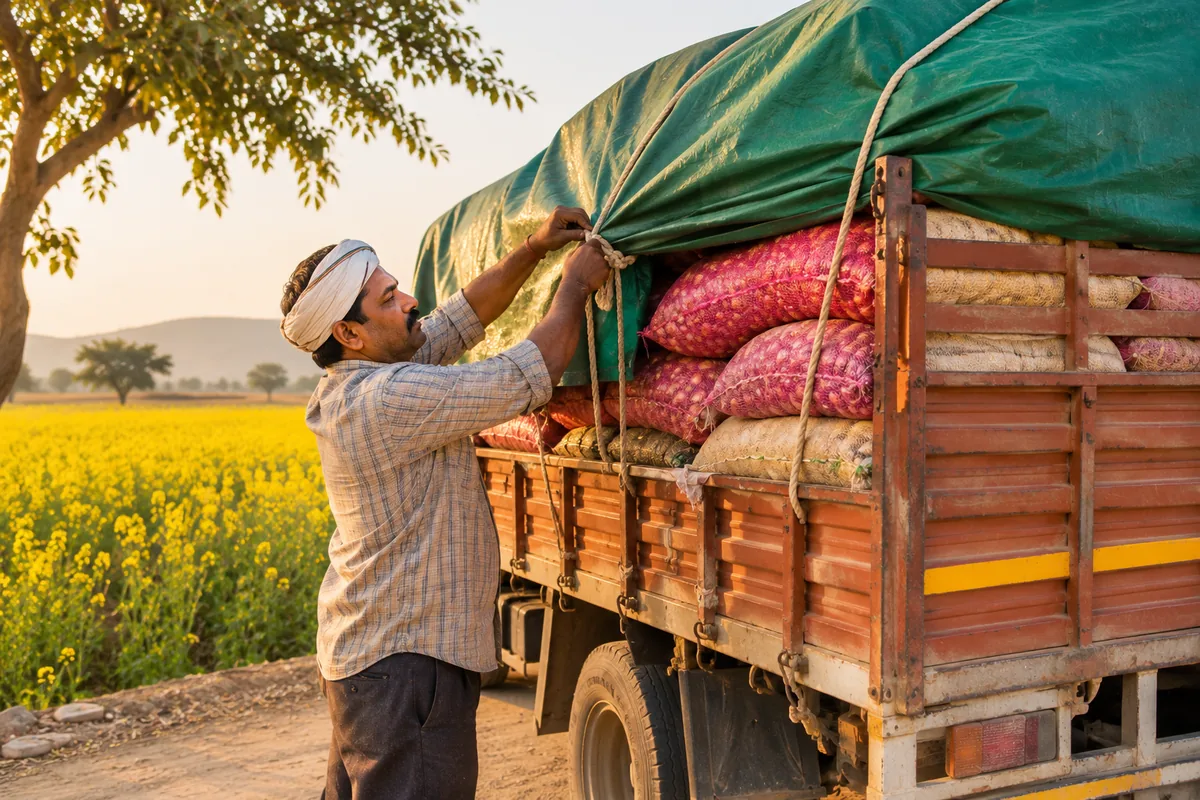
- A good-quality tarpaulin covers the load fully, tied down at all points
- Stops are planned at safe places, and cargo is not left uncovered during rain or fog
- Produce that is sensitive to temperature is moved at suitable hours
Cold mornings in the plains also bring fog on highways. Drivers should follow the advice in our winter fog driving safety guide, and plan trips with realistic transit times.
Documents and weighment at the mandi
Keep the sale invoice, weighment slip, mandi fee receipts where applicable and the e-way bill ready before the vehicle leaves. Agricultural produce may have special treatment under tax and movement rules, so confirm the current position for your commodity with your accountant rather than assuming. Compare the loading weight with the weight at the destination, and record both on the lorry receipt. Our guide to proof of delivery management explains how signed delivery records speed up payment and settle shortage disputes.
Control cost and follow up payment
Good route planning saves diesel and tolls on long hauls to processing hubs and distant markets; see route planning for trucks. Where loading is slow, trucks wait and costs rise, so book slots with the mandi and the warehouse where possible. Finally, settle freight terms in writing: advance, balance, detention charges and responsibility for shortage. Written terms avoid arguments during the busiest weeks, when everyone is under pressure and memories differ.
Review how the season went once it ends. Note the delays, shortages and costs, and use them to book earlier and plan better next year; a short written review is enough.
ATTPL Fleet
ATTPL Fleet supports traders and processors with planned vehicle placement for seasonal movement across Rajasthan and India. Toll-free: 1800 890 0815.
Frequently asked questions
When should seasonal transport be booked?
As early as you can estimate your volumes, ideally weeks before arrivals peak, with a confirmation closer to the loading date.
Why is overloading risky during the rush?
It can cause penalties, tyre and brake failures and accidents, and may void insurance support. Stay within the permitted load.
How can shortage disputes be reduced?
Record weights at loading and unloading, use signed delivery proof and agree shortage terms in writing before the trip.
Sources and further reading
This article is general information for traders, shippers and transporters.