
Fleet Operations
Truck Preventive Maintenance Checklist for Fleet Owners
By ATTPL Fleet · · 4 min read
A practical preventive maintenance checklist for trucks: daily, weekly and periodic checks, record keeping and how planned servicing cuts breakdowns.
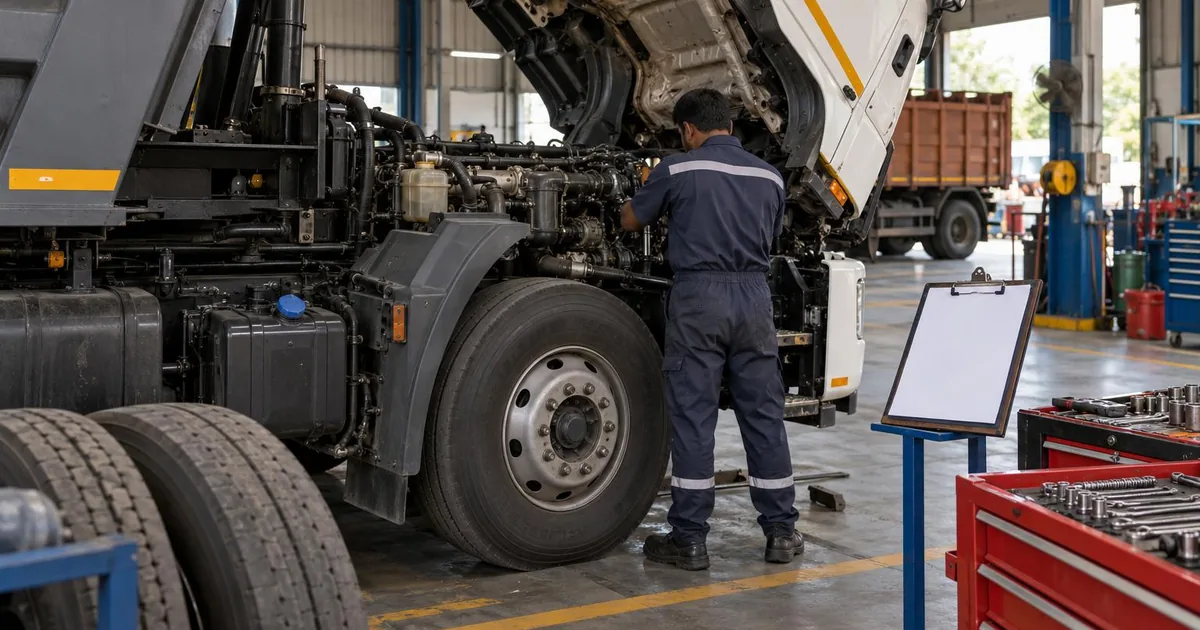
Why preventive maintenance pays
For any transport business, a truck that stands still is a cost, and a truck that breaks down on the highway is a bigger one: missed delivery windows, towing, emergency repairs and an unhappy customer. Most breakdowns are not sudden; they start as small issues that a planned check would have caught. This guide sets out a simple preventive maintenance routine that fleet owners and transport managers in India can adopt and adapt.
Preventive maintenance means servicing vehicles on a planned schedule based on time, kilometres or engine hours, instead of waiting for something to fail. It improves safety, protects resale value, reduces fuel waste from poorly maintained engines and tyres, and makes delivery times more predictable. It also helps you keep documents such as fitness certificates and pollution certificates up to date without last-minute rushes.
Daily walk-around checks by the driver
A five to ten minute check before every trip catches most visible problems:
- Tyres: pressure, cuts, bulges, tread depth and wheel nuts.
- Fluids: engine oil, coolant, brake fluid and any leaks under the vehicle.
- Brakes: pedal feel and air pressure build-up on air-brake vehicles.
- Lights and indicators, horn, wipers and mirrors.
- Load securing: lashings, tarpaulin and tail gate.
- Documents on board: RC, insurance, permit, fitness, PUC and e-way bill where needed.
Give drivers a simple printed or app-based checklist and ask them to report defects before leaving, not after.
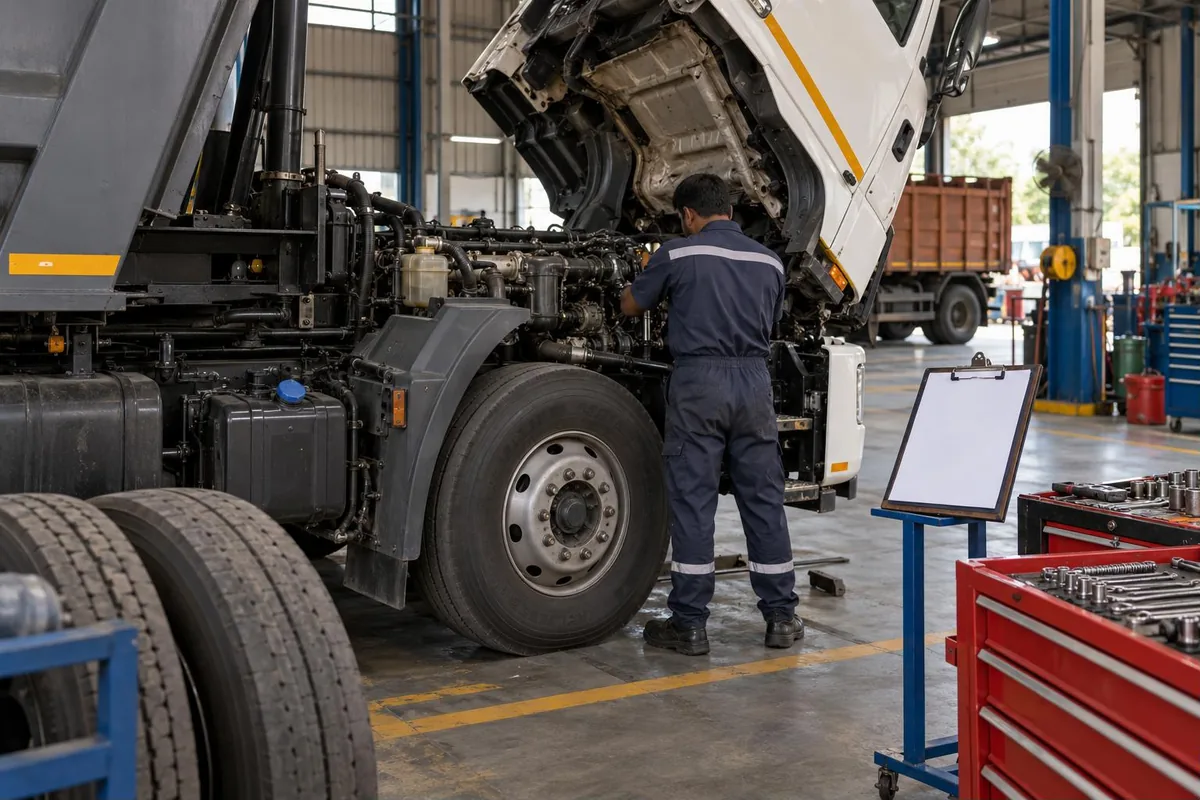
Weekly and monthly checks
- Battery terminals and charge level.
- Air filter condition, especially on dusty Rajasthan routes.
- Belts, hoses and radiator for wear or cracks.
- Greasing of chassis points, kingpins and fifth wheel on trailers.
- Suspension springs, U-bolts and shock absorbers.
- Tyre rotation and alignment as per your tyre policy.
Periodic servicing by kilometres
Engine oil and filter changes, fuel filter replacement, gearbox and differential oil, brake lining inspection and clutch adjustment should follow the manufacturer's service schedule for your model and duty cycle. Heavy loads, hilly routes, idling in traffic and extreme heat all count as severe duty, which usually means shorter intervals. Keep the owner's manual handy and agree a schedule with your authorised workshop.
Tyres: the biggest controllable cost
After fuel, tyres are often the largest running cost of a truck, and tyre failures are a common cause of highway breakdowns. Under-inflation makes tyres run hot, wears the shoulders and raises fuel use; over-inflation reduces grip and causes uneven wear in the centre. Check pressure cold, at the start of the day, with a calibrated gauge, and follow the pressure chart for the load you carry.
Keep a tyre register with the serial number, fitment date, position and kilometres of every tyre. It shows which brands and positions give the best life, and it helps you plan rotation, retreading and replacement before tyres reach the legal and safe tread limit. Mismatched tyres on the same axle should be avoided.
Keep records, not just receipts
A maintenance log for each vehicle should show the date, odometer reading, work done, parts replaced and cost. Over a few months this data shows which vehicles cost the most to run, which parts fail repeatedly and when a vehicle is due for replacement. Many fleet operators combine maintenance logs with GPS data so that service reminders are triggered automatically by kilometres travelled.
Build maintenance into planning
The best schedule fails if vehicles are always on the road. Plan maintenance slots into dispatch the same way you plan loading slots, keep a small buffer of standby vehicles for critical customers, and stock fast-moving spares such as filters, bulbs and brake parts. For large project movements, such as the dedicated fleets we run for infrastructure projects, maintenance windows are agreed with the client in advance.
Support from the ATTPL network
Maintenance discipline depends on people as much as parts. ATTPL HRMS helps transport companies manage driver and mechanic records, shifts and training. Businesses that move construction material can coordinate with ATTPL Infra, and shippers of heavy stone can read our sister site's guide on packing and transporting marble and granite slabs.
Move your cargo with ATTPL Fleet
ATTPL Fleet provides road transportation and supply chain solutions from Jaipur across India with planned, well-maintained vehicles. Contact our team to discuss your routes, volumes and schedule.
Frequently asked questions
How often should a truck be serviced?
Follow the manufacturer's schedule for your model, and shorten intervals for severe duty such as heavy loads, hilly routes, dust and long idling.
What should drivers check before every trip?
Tyres, fluid levels and leaks, brakes, lights, mirrors, load securing and the vehicle documents on board.
Does preventive maintenance really save money?
Yes. Planned servicing reduces breakdowns, towing and emergency repairs, and helps vehicles keep better fuel efficiency and resale value.