
Logistics Planning
Last-Mile Delivery: A Practical Guide for Jaipur Businesses
By ATTPL Fleet · · 3 min read
How businesses in Jaipur can plan last-mile delivery: own fleet vs partners, route planning, delivery windows, proof of delivery, returns and costs.
Why the last mile is the hardest
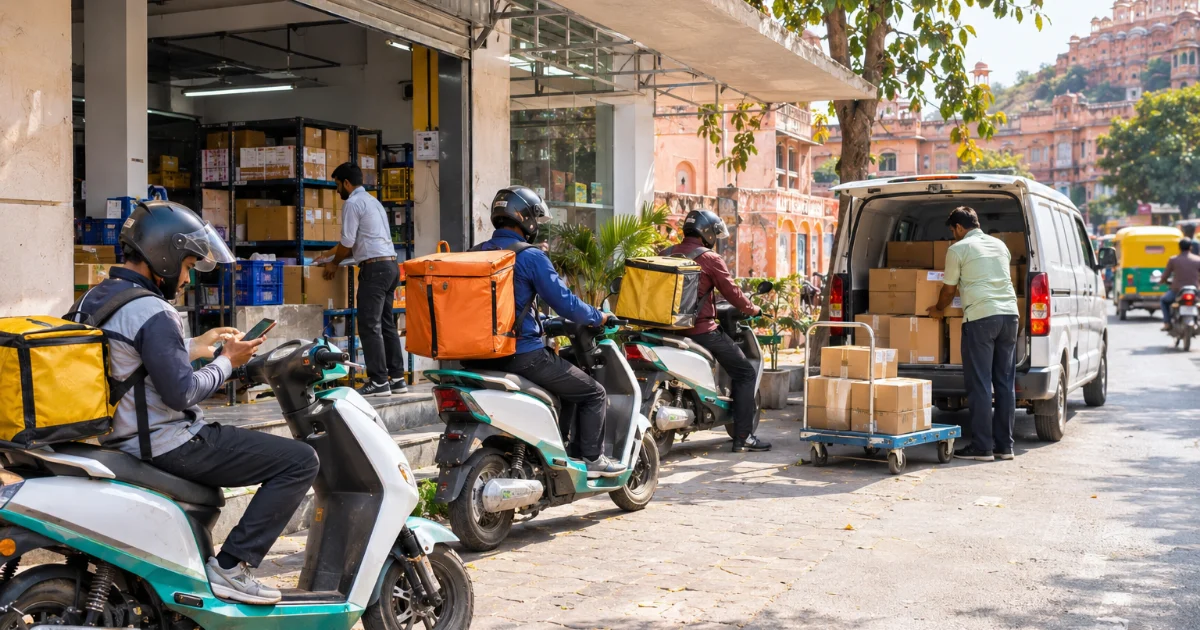
The last mile — from a warehouse or store to the customer's door — is often the most expensive and visible part of logistics. Narrow lanes in the old city, traffic on main roads, gated colonies and customers who are not at home all add time and cost. For retailers, distributors and online sellers in Jaipur, getting this right decides whether customers come back.
Own fleet, partners or a mix
- Own riders and vans give control over service and branding, but carry fixed costs and management effort.
- Courier and delivery partners convert costs to per-parcel rates and handle peaks, but service quality varies.
- Many businesses use a mix: own vehicles for core areas and high-value orders, partners for distant pin codes and peak days.
For bulk movement into the city, linking last-mile operations with full-truck or part-truck freight helps; see our FTL vs PTL guide.
Plan routes and delivery windows
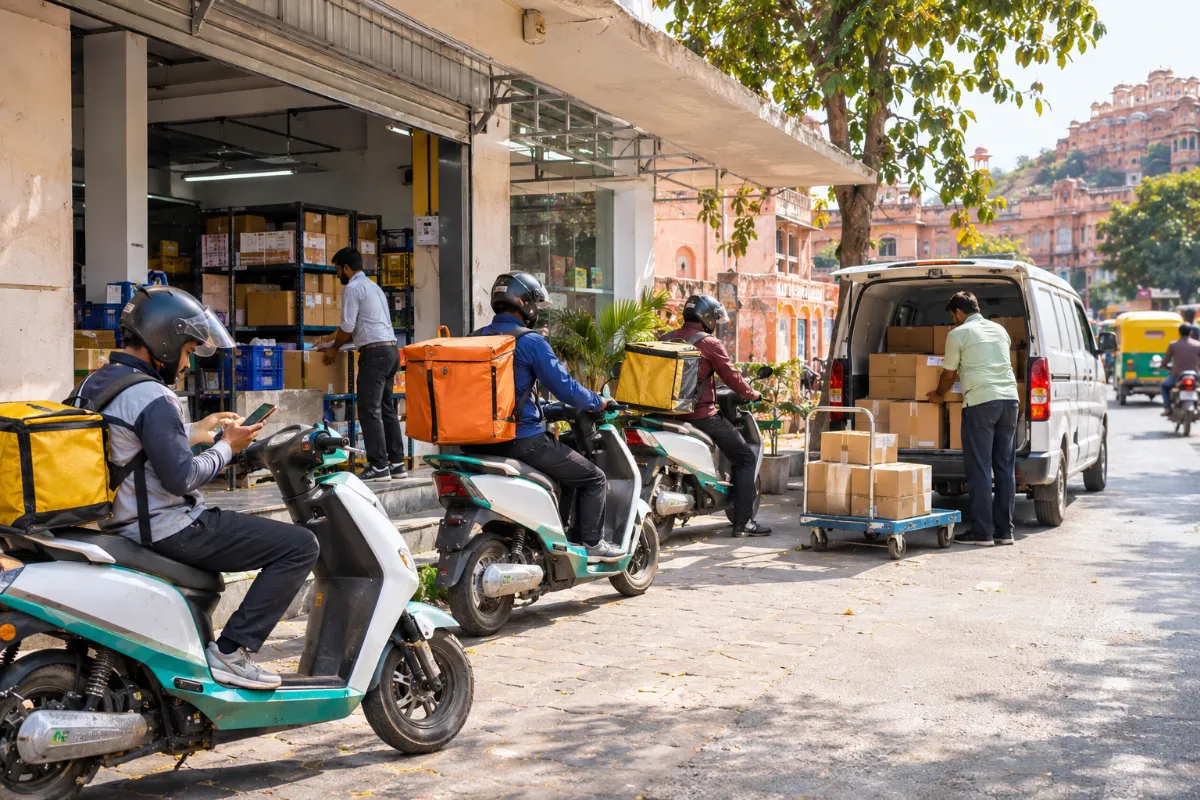
Group deliveries by area and time window instead of sending riders out order by order. Plan routes before dispatch, keep heavy or bulky items for vans, and avoid peak traffic hours where possible. Offering customers clear delivery slots — and keeping to them — reduces failed deliveries. Route planning tools and simple mapping apps make a big difference even for small teams.
Choose the right vehicles for the city
Vehicle choice shapes cost and reliability. Two-wheelers suit small parcels, documents and food in dense areas; three-wheeler cargo vehicles carry more volume through narrow lanes; small vans and pick-ups handle appliances, furniture and bulk orders for shops. Match the vehicle to the typical order size and the areas served, and keep a backup option for peak days such as festivals and sale events.
- Two-wheelers: fastest in traffic, lowest cost per drop, limited load.
- Three-wheelers: good balance of capacity and access for markets and old-city lanes.
- Small vans: for bulky goods, B2B deliveries and multiple drops to shops.
Check local entry restrictions and timing rules for goods vehicles in congested areas before planning routes, and keep vehicles serviced so that breakdowns do not disrupt the day's deliveries.
Proof of delivery and returns
- Use OTP, signature or photo proof of delivery for every order.
- Record failed delivery reasons to fix address and timing problems.
- Set a clear process for returns, exchanges and cash collection.
- Reconcile cash-on-delivery amounts daily.
Customer details, delivery history and complaints are easier to manage in a CRM; ATTPL CRM helps sales and service teams keep one customer view.
Communicate with customers
Most last-mile complaints are about uncertainty rather than delay. Send an order confirmation, a dispatch message and an arrival alert with the rider's contact number. Let customers reschedule easily if they will not be available. After delivery, a short feedback request helps you spot problems with particular areas, riders or products before they turn into lost customers. Consistent communication builds trust, especially for first-time buyers.
Control the cost per delivery
Track a few numbers every week: deliveries per rider per day, first-attempt success rate, cost per delivery and on-time percentage. Electric two-wheelers can lower running costs for short urban routes, and charging at the hub with rooftop solar can cut costs further; ATTPL Solar works on commercial solar. A small, well-located dispatch point is also important; our warehouse selection checklist explains what to look for.
Rider safety and training
Riders spend the whole day in traffic. Helmets, reflective jackets, well-maintained vehicles, realistic targets and fair pay reduce accidents and attrition. Train riders in customer courtesy and handling of fragile items. Attendance, shifts and payouts for delivery staff can be managed with ATTPL WorkforceOS.
For dedicated delivery vehicles and logistics support in Jaipur and Rajasthan, contact ATTPL Fleet.
Frequently asked questions
Should a small business run its own delivery fleet?
It depends on order volume and density. Many start with partners and add their own riders for core areas as volumes grow.
How can failed deliveries be reduced?
Confirm addresses, offer delivery slots, send updates before arrival and record reasons for every failed attempt.
Are electric two-wheelers good for last-mile delivery?
For short urban routes with charging at the hub, they often have lower running costs. Check range, load capacity and charging time for your routes.