
Maintenance & Safety
Truck Air Brake Maintenance: A Safety Checklist for Fleet Owners
By ATTPL Fleet · · 2 min read
How truck air brakes work, the daily and periodic checks drivers and workshops should do, warning signs of brake trouble and how to build a brake safety routine.
Why brakes deserve a separate routine
Most medium and heavy trucks in India use air brakes. A compressor fills air tanks, and when the driver presses the pedal, air pushes the brake chambers that apply the brakes at each wheel. The system is reliable when maintained, but leaks, water in tanks, worn linings and wrong adjustment can reduce braking power without much warning, especially on long descents and with heavy loads.
Driver's daily pre-trip check
- Build up air pressure and confirm the low-pressure warning light or buzzer goes off at the right point
- With the engine off and brakes applied, listen and watch for a quick drop in pressure that indicates a leak
- Drain water and oil from the air tanks as recommended, or confirm the automatic drain works
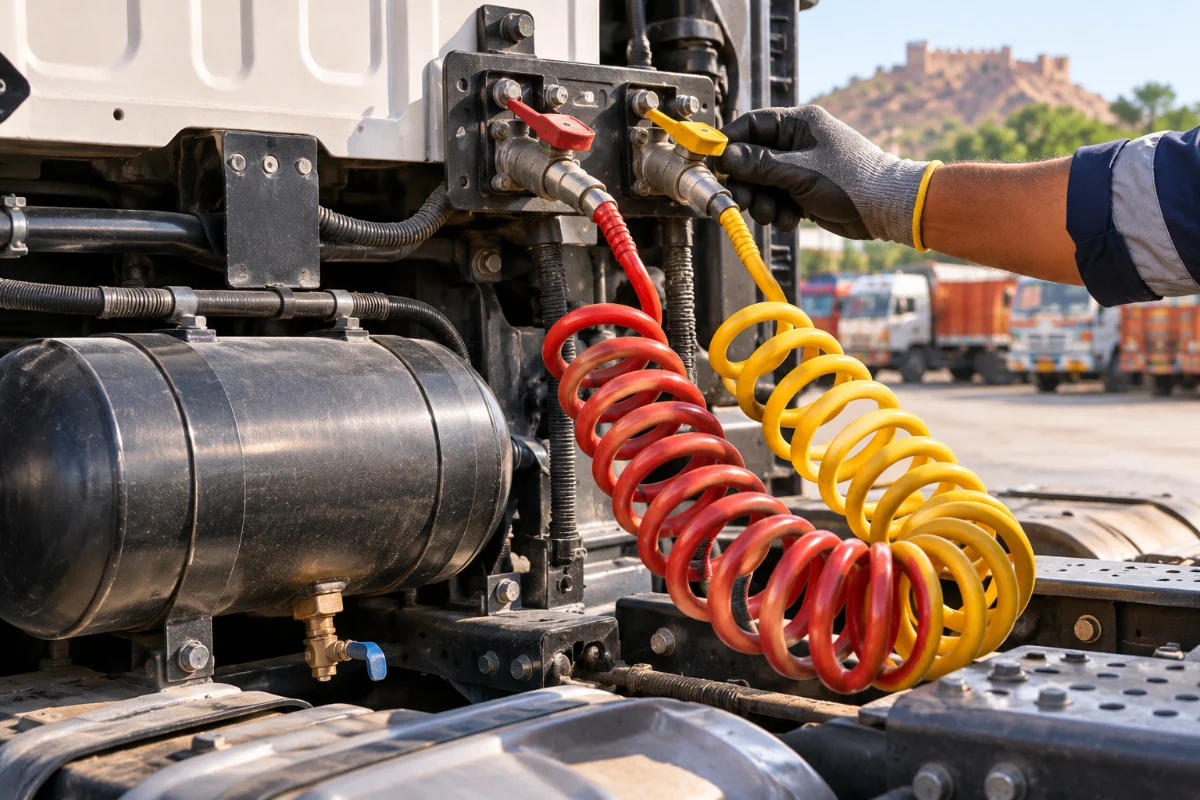
- Check hoses and couplings between tractor and trailer for cracks, rubbing or loose connections
- Test the parking brake and service brake at low speed before leaving the yard
Add these steps to the driver safety training checklist so every driver follows the same routine.
Workshop checks at each service
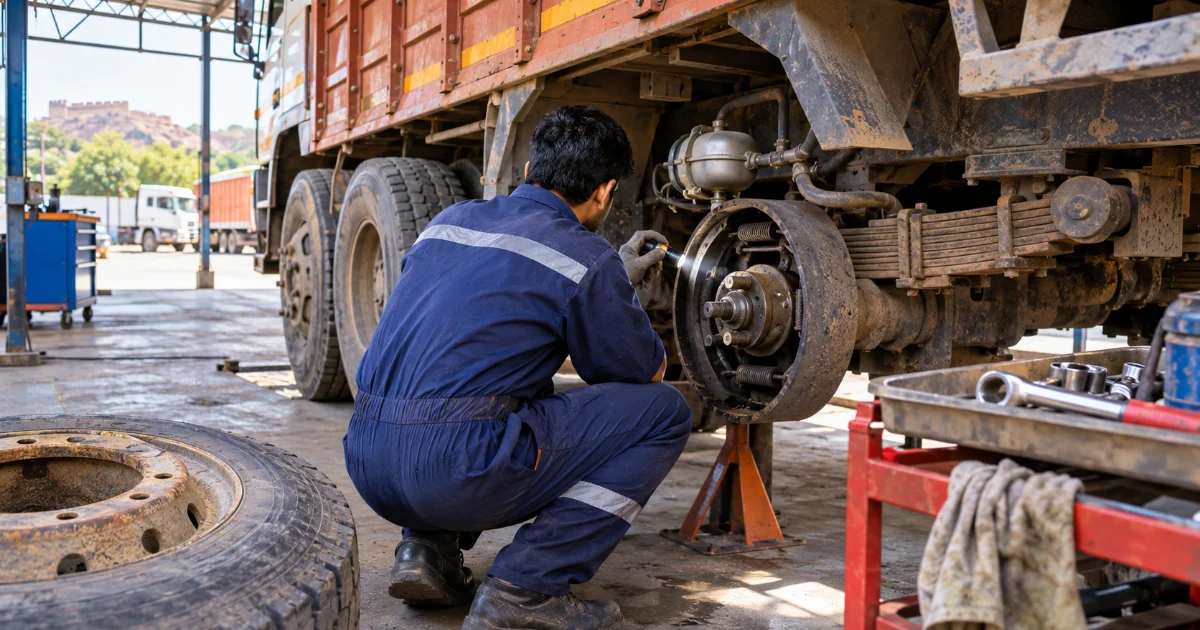
At scheduled service, the workshop should check brake lining thickness, drum or disc condition, slack adjuster setting and push-rod travel, air dryer cartridge, compressor output, valve operation and wheel-end seals. Replace parts with genuine or approved equivalents and record every job against the vehicle number. Our preventive maintenance checklist shows how to schedule this by kilometres and days.
Warning signs drivers must report
- Pressure takes longer than usual to build or drops quickly
- The truck pulls to one side when braking
- Grinding noise, burning smell or overheated wheel hubs
- A soft or long pedal, or the low-air warning coming on while driving
A vehicle with any of these signs should not continue a trip until checked. Overloading also increases stopping distance and heats brakes; see axle load limits.
Ghats, hills and long descents
Use a lower gear and the exhaust brake or retarder where fitted, and avoid riding the service brake for long periods, which overheats drums and reduces braking (brake fade). Plan rest stops on hilly routes in Rajasthan and neighbouring states, and include brake checks in the vehicle fitness and permit renewal preparation.
How ATTPL Fleet can help
ATTPL Fleet helps transporters plan maintenance schedules, track service records and train drivers. For workshop systems and records, ATTPL IT supports software setup.
Frequently asked questions
How often should air tanks be drained?
Follow the manufacturer's advice; many operators drain manually every day or rely on an automatic drain that is checked regularly.
What causes brake fade in trucks?
Overheating of drums or linings, usually from continuous braking on long descents or overloading.
Who should adjust truck brakes?
A trained mechanic, following the manufacturer's procedure; incorrect adjustment can reduce braking power.
Sources and further reading
This article is general information for transporters and fleet operators, not legal or engineering advice. Rules and standards change; check the latest notifications and the vehicle manufacturer's manual.