
Transport Documents
Lorry Receipt (LR/Bilty): What It Is and How to Use It Correctly
By ATTPL Fleet · · 2 min read
A practical guide for shippers and transporters on the lorry receipt or bilty: what details it must carry, how it links with the invoice and e-way bill, and how to avoid disputes over delivery and claims.
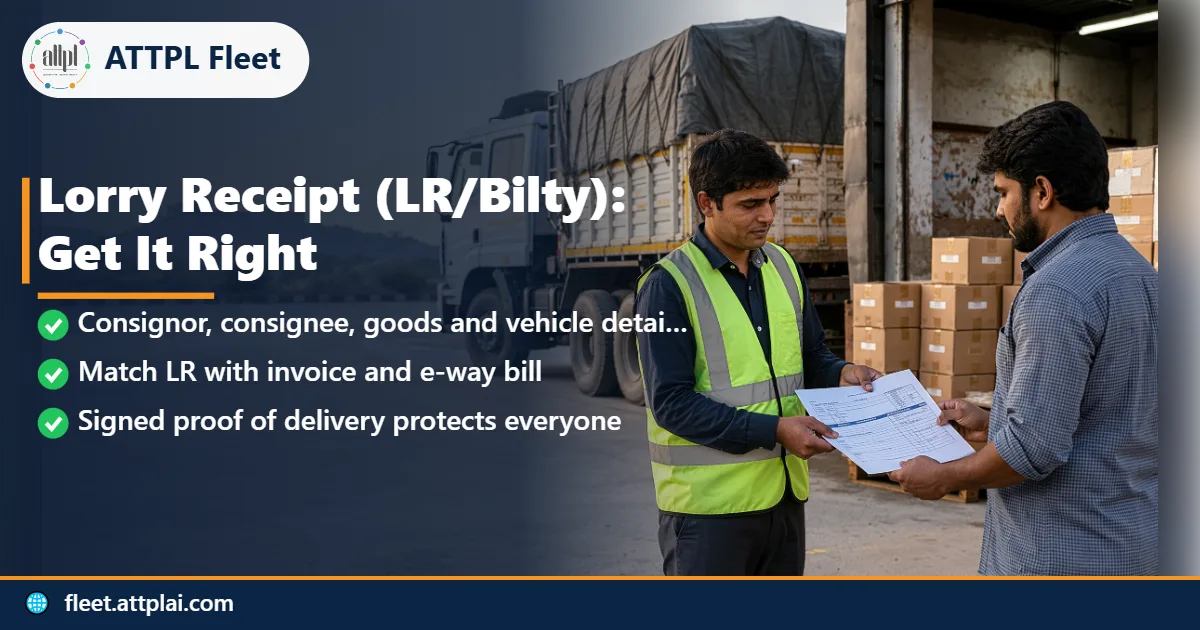
What a lorry receipt is
A lorry receipt, also called LR, bilty or consignment note, is the document a transporter issues when it accepts goods for road transport. It is proof that the transporter has received the goods, a record of the terms of carriage and the main paper that is used to deliver the goods to the right person.
A correct LR protects the sender, the transporter and the receiver. A missing or incomplete LR is one of the most common reasons for delivery disputes and rejected claims.
Details an LR should carry
- LR number and date, and the transporter's name and address
- Names and addresses of the consignor (sender) and the consignee (receiver)
- Vehicle number and driver details
- From and to places
- Description of goods, number of packages, weight and packing type
- Invoice number and value, and the e-way bill number where required
- Freight terms, such as paid, to-pay or to-be-billed
- Any special instructions, such as fragile or keep dry
Read our guide on the e-way bill checklist for road transport so that the LR and the e-way bill match.
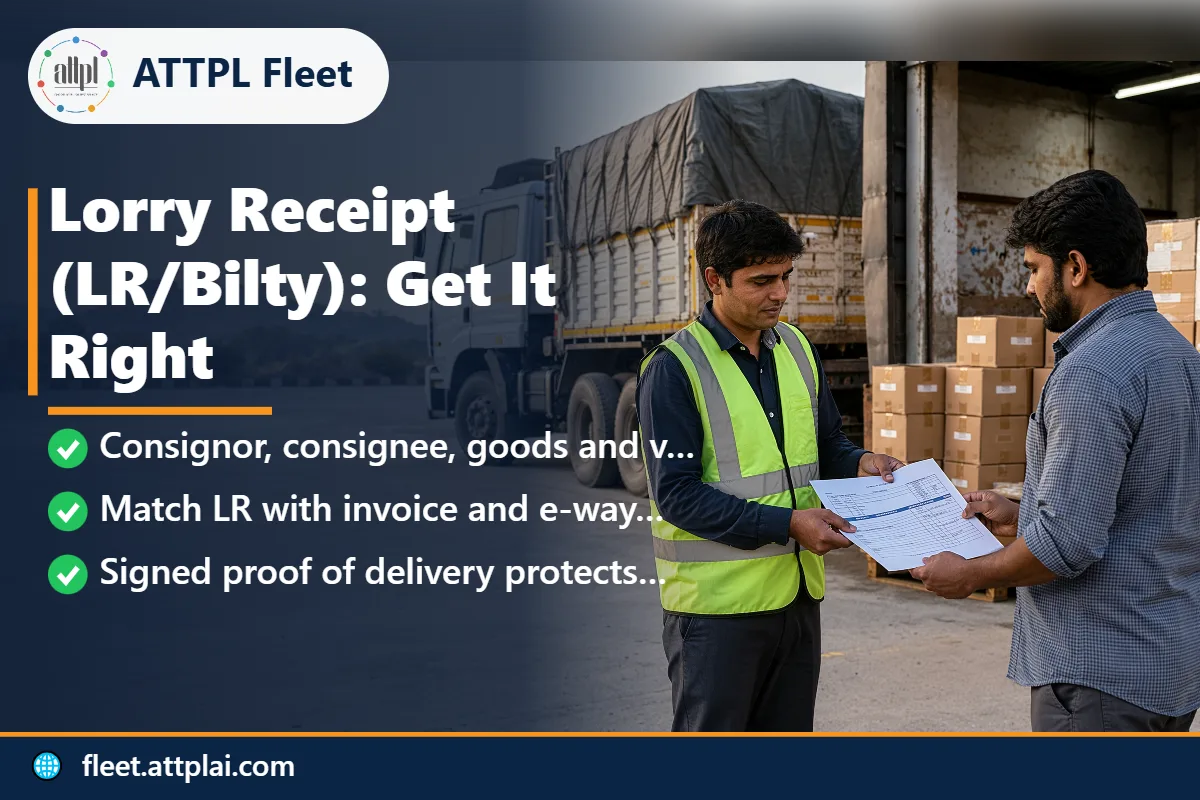
How to use the LR well
- Fill the LR completely before the vehicle leaves, never leave blank spaces
- Check the number of packages and the condition of the goods at loading, and note any damage on the LR
- Get the driver's and the loading supervisor's signature
- Send a copy to the consignee and keep one copy for your records
- Use the LR number for tracking, for example with a GPS tracking system
- At delivery, get the consignee's signed acknowledgement, which becomes the proof of delivery
LR and proof of delivery
The signed copy of the LR or a separate delivery slip should come back to the transporter and the sender quickly. Late return of delivery proof delays billing and payments. See our guide on proof of delivery management for a simple tracking routine.
Damage, shortage and claims
If goods are short or damaged, note it on the LR or the delivery receipt at the time of delivery and inform the transporter and the insurer without delay. Claims need the LR, invoice, e-way bill, photos and the signed delivery document. Our guide to goods in transit insurance explains the claim steps.
Good practice for shippers
Keep LR copies in order by month and vendor. Compare LR details with the freight bill before payment, as shown in the freight bill audit guide. Write the key terms of the LR in your transport contract.
Frequently asked questions
Is an LR the same as an invoice?
No. The invoice is the sale document between seller and buyer. The LR is the transport document between sender and transporter.
Who issues the LR?
The transporter issues it when it takes charge of the goods. The sender should check it before the vehicle leaves.
What if the LR is lost?
Ask the transporter for a duplicate copy and keep the delivery proof safe. Tell the consignee, and keep a record in writing.
Sources and further reading
This article is general information and is not legal advice. Documents and rules can change, so confirm current requirements with your transporter, insurer or adviser.