
Fleet Management
Fuel Cost Control for Truck Fleets: A Practical Guide
By ATTPL Fleet · · 2 min read
Practical ways fleet owners in India can control diesel costs: driver habits, maintenance, tyre pressure, route planning, load optimisation and monitoring.
Fuel is the biggest running cost
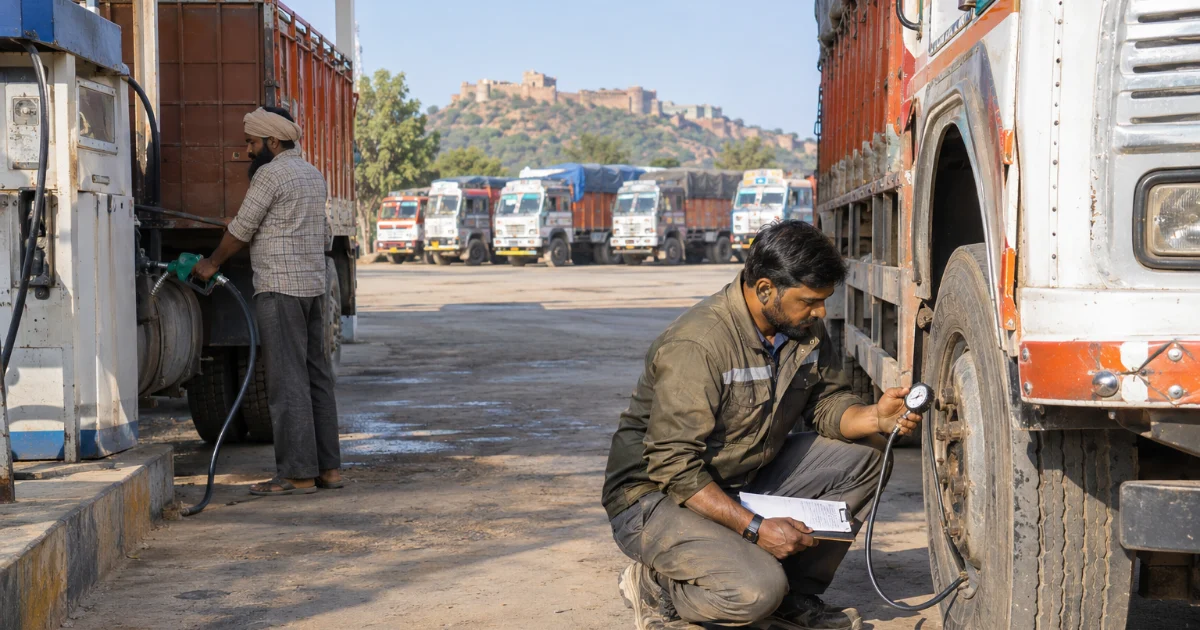
For most truck fleets in India, diesel is one of the largest operating expenses. Even a small improvement in kilometres per litre adds up across many vehicles and long distances. Fuel efficiency depends on the truck, the load, the road and — very importantly — the driver. A structured approach helps fleet owners control costs without compromising safety.
Driver habits make a big difference
- Smooth acceleration and braking instead of sudden starts and stops.
- Driving within the efficient speed range for the vehicle.
- Avoiding long idling at loading points and toll plazas.
- Using the right gear and anticipating traffic.
- Planning rest stops to avoid fatigue-driven driving.
Regular training and feedback work better than penalties. Our driver safety training checklist can be combined with fuel-efficient driving modules.
Maintenance and tyres
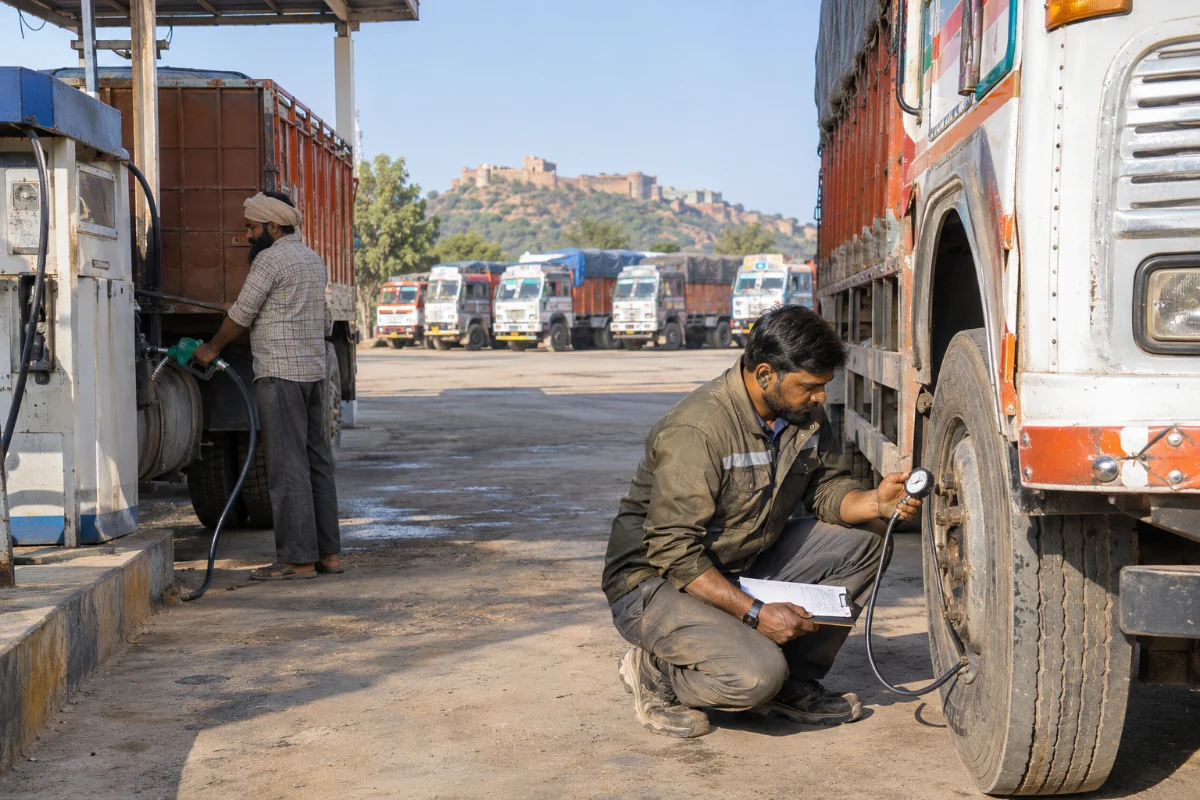
Poorly maintained engines, clogged air filters, dragging brakes and wrong wheel alignment all waste fuel. Under-inflated tyres increase rolling resistance and wear. Follow a preventive schedule and check tyre pressure regularly — see our preventive maintenance checklist.
Plan routes and loads
- Plan routes to avoid congestion and unnecessary detours.
- Reduce empty return trips by arranging back-loads.
- Load within permitted limits — overloading increases fuel use, wear and safety risks.
- Choose the right vehicle size for the load.
Our article on rail vs road freight for bulk cargo explains when another mode may be more economical.
Measure and monitor
You cannot improve what you do not measure. Track fuel issued and kilometres run for every truck and trip, and compare against benchmarks for similar vehicles and routes. GPS tracking and telematics show idling, harsh braking and route deviations; see our GPS tracking guide. Fuel cards and controlled refuelling reduce pilferage and make records more accurate.
Build a fuel-saving culture
Technology helps, but people make the biggest difference. Share fuel performance data with drivers openly, recognise those who consistently drive efficiently and safely, and use incentive schemes carefully so that they never encourage risky driving or overloading. Involve mechanics too: they often spot early signs of problems that increase fuel use, such as leaking injectors or slipping clutches.
Set realistic targets for each route and vehicle type, review them monthly and discuss the reasons behind changes. Over time, a fleet that measures, discusses and acts on fuel data usually sees steady improvement in costs, safety and vehicle life.
Quick wins checklist
- Check tyre pressure weekly.
- Cut unnecessary idling.
- Service air filters and injectors on schedule.
- Plan back-loads to reduce empty running.
- Track fuel per trip and investigate outliers.
Looking ahead
Newer emission-standard engines, aerodynamic aids and alternative fuels can further cut costs, but they need careful evaluation of total cost of ownership. Software that combines trips, fuel and maintenance data helps managers spot problems early; ATTPL IT builds such business software, and ATTPL Finance can explain vehicle and working capital finance. For dedicated fleet services, contact ATTPL Fleet.
Frequently asked questions
How can drivers save fuel?
Smooth acceleration and braking, steady efficient speeds, less idling and correct gear use make a noticeable difference.
Does tyre pressure affect fuel consumption?
Yes. Under-inflated tyres increase rolling resistance and fuel use, and wear out faster.
How should fleet owners track fuel?
Record fuel issued and kilometres run for each trip, compare against benchmarks and use GPS or telematics data to find causes of high consumption.