
Safety & Compliance
Cargo Securing on Trucks: A Practical Load Lashing Guide for Fleets
By ATTPL Fleet · · 2 min read
How transporters and shippers can secure cargo safely — load planning, weight distribution, lashing methods, straps and chains, dunnage, checks during the journey and common mistakes that cause accidents and damage.

Plan the load before loading
A load that shifts during braking or on a curve can damage goods, overturn a truck or fall on the road. Proper cargo securing is one of the simplest ways for fleets to cut accidents, claims and delays.
Know the weight, size and nature of each item before it reaches the dock. Heavy items go at the bottom and as close to the centre line and front of the body as practical, so axle loads stay within limits — see our axle load limits guide. Fill gaps or block them, because empty spaces let cargo build up momentum.
Choose the right lashing method
- Top-over lashing presses the load down onto the floor to increase friction
- Direct or loop lashing ties the cargo directly to anchor points to stop movement
- Blocking against the headboard, side walls or chocks prevents sliding
- Anti-slip mats under cargo reduce the number of lashings needed
Most loads need a combination of blocking and lashing.
Equipment and its condition
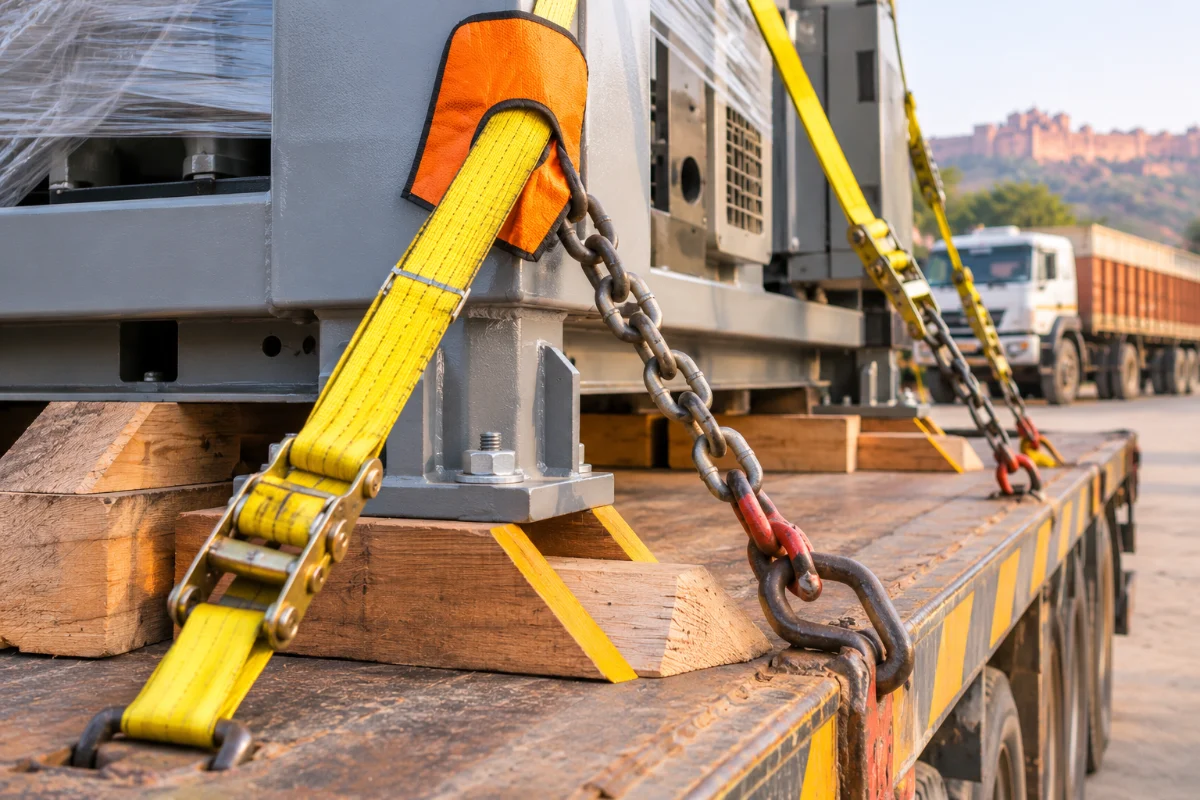
Use straps, chains and binders rated for the load, and know the rated capacity marked by the manufacturer. Replace straps that are cut, burnt or frayed and chains with stretched or cracked links. Protect straps from sharp edges with corner protectors. Check that the truck's anchor points are strong and not corroded during preventive maintenance.
Special loads
- Steel coils need cradles or chocks and chain lashing
- Stone slabs travel upright on A-frames with timber packing
- Machinery should be secured at designated lifting or tie-down points
- Long or wide loads may need permits and escorts
Over-dimensional consignments follow separate rules — see our ODC transport planning checklist. Marble and granite shippers can also read the packing guide from ATTPL Mining.
Checks during the journey
Straps loosen as loads settle. Drivers should recheck tension after the first stretch of the journey and at every major halt, and after rough roads. Train drivers to inspect lashings as part of their routine, as covered in our driver safety training checklist.
How ATTPL Fleet helps
ATTPL Fleet supports businesses with dedicated and project fleets, trained drivers and safe loading practices. To plan logistics for a project, contact ATTPL Fleet.
Frequently asked questions
How often should load straps be checked during a trip?
After the first short distance, at every major stop and after rough roads, since loads settle and straps loosen.
Is blocking better than lashing?
They work together. Blocking stops sliding efficiently, and lashing holds the load down or in place.
Who is responsible for securing cargo?
Both the consignor who loads and the transporter who carries share responsibility; agree roles in writing.
Sources and further reading
This article is general guidance. Follow the load-securing requirements of your vehicle manufacturer, equipment ratings and applicable regulations.